Editorial
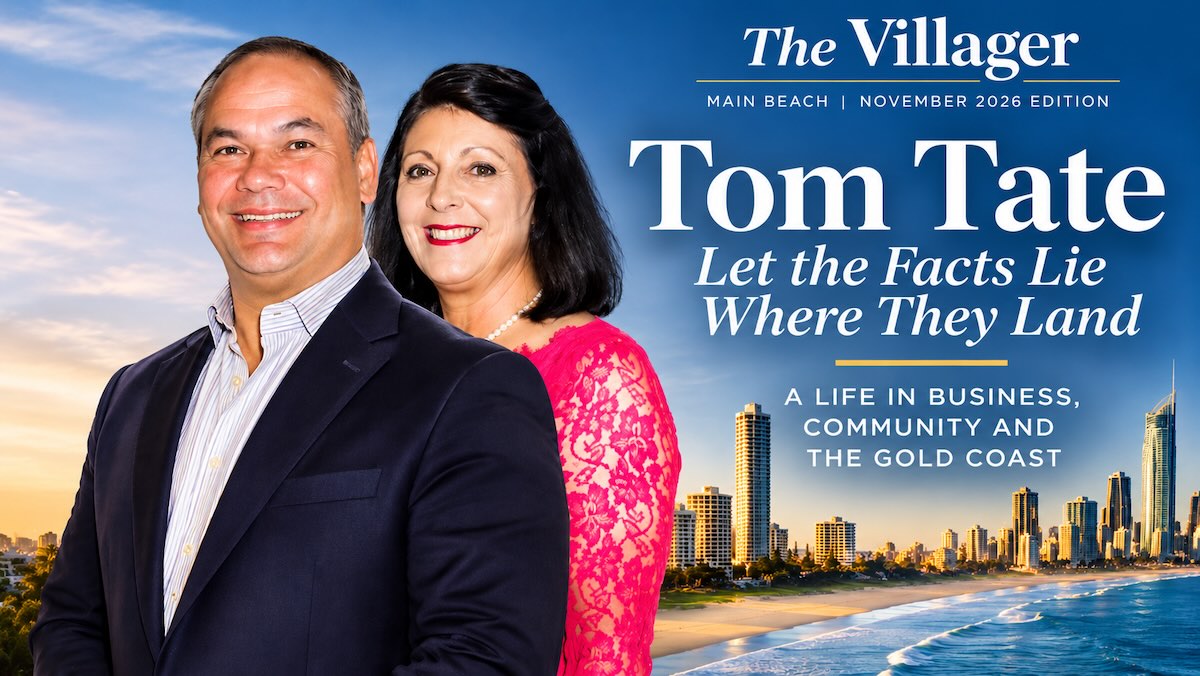
Tom Tate
Let the Facts Lie Where They Land
Read the full article below or listen to each section, narrated by Steve Holmes using AI-enhanced voice technology.
He was a businessman with an engineering background who became mayor of one of the world's best-known tourism cities.
He believed that prosperity mattered, but so did the people who called his city home. Kindness, community and the responsibility of local government were central to the way he described his leadership.
His city attracted visitors from around the world, drawn by Disneyland, one of the world’s most famous tourist attractions. It was also home to the Mighty Ducks, the ice hockey team inspired by a Disney film and now known as the Anaheim Ducks.
His name was Tom Tait.
Yes, Tait. With an i.
He was Mayor of Anaheim, California, from 2010 to 2018, and during his mayoralty he championed an initiative called the City of Kindness.
Now, travel across the Pacific to another city built around tourism, opportunity and an enviable lifestyle.
Here we find another businessman, another engineer, another mayor.
Tom Tate.
With an e.
Two men. Almost identical names. Two cities built around tourism. Two businessmen who entered local government with ideas about how their cities should develop.
The coincidence of their names amused me. But it was never the reason I wanted to tell this story.
I wanted to understand the man.
And unlike the Tom Tait of Anaheim, I had known Tom and Ruth Tate through our children's schools, years before Tom became Mayor of the Gold Coast.
Our children were growing up around the same time. Our daughter Georgia went through St Hilda's with their daughter Emily, and the girls were friends throughout those school years. Their son Alex was a year ahead of our son Zach at The Southport School. Tom and Ruth were not close friends of ours. We knew one another as parents do, through school functions and the occasional gathering organised by other parents. When Tom became mayor, we naturally saw much less of them.
Tom wasn't the mayor then. He was simply Tom, although his manner already suggested someone unlikely to become a conventional politician.
Even before politics, Tom had a way of dividing opinion. The determination and impatience with obstacles that some admired were the very qualities others found difficult. Brave, sometimes brazen, he could turn an ambition into something he seemed personally determined to make happen.
Whether everyone likes Tom Tate has never seemed the most interesting question. What interests me is the life he has lived: what he attempted, accomplished, lost and returned to, and whether the man who eventually occupied the mayor's office was really so different from the one who had spent years trying to get there.
To understand that man, I began looking backwards.
The Boy From Laos
Thomas Richard Tate's story began in Vientiane, Laos, in 1959.
His father, Warwick, was an Australian engineer. His mother, Prapai, was Thai.
Before the Gold Coast, before the hotels, basketball teams, elections and arguments about the future of a city, there was a young boy growing up between cultures.
His parents separated, and Tom eventually came to Australia to live with his father.
He attended Scots College in Sydney.
That might seem an unremarkable detail until you encounter a story Tom told the Rotary Club of Surfers Sunrise many years later.
He recalled arriving at Scots College as an eleven-year-old and joining boxing classes, partly because they offered an escape from studying.
Now, boxing to a boy raised in Thailand apparently meant something rather different from boxing at a Sydney private school.
According to Tom's recollection, his first encounter with the school's version of the sport ended with a visit to the headmaster.
He expected recognition for beating a larger opponent.
Instead, he received a caning for breaking the rules.
I rather like that story.
A young boy had entered a contest believing he understood how to fight, only to discover that the people running it had a different set of rules.
It would be too convenient to claim that one schoolboy incident explains the future mayor. But it introduces a question that has followed Tom through much of his life: what happens when his way of doing things collides with the rules others expect him to follow?
The Engineer
Tom followed his father's professional footsteps, studying civil engineering at the University of New South Wales.
Engineering is an interesting education.
It teaches you that the physical world has rules. A structure must carry its load. A bridge must cross the distance. A building must stand.
You can argue about the design, but ultimately the thing either works or it does not.
Tom entered construction before moving into property development, tourism and hospitality.
It was also during university that he met Ruth.
Ruth had grown up in Cowra, trained as a physiotherapist and pursued her own career.
They married, raised four children and eventually established their family life on the Gold Coast.
The public Tom takes up much of the room. Ruth appears more quietly in the story, not merely beside him at official functions but as someone whose judgement he has publicly said he trusts. Her influence becomes clearer as his ambitions grow.
The Gold Coast Businessman
By the 1990s, Tom was increasingly involved in the Gold Coast's property and hospitality economy, including the family interests associated with the Islander Resort in Surfers Paradise.
In a later podcast interview, Tom recalled how he and Warwick came to work together after Tom managed refurbishment work at his father's Surfers Paradise hotel. Both had strong views, he said, so they made an unusual agreement: either could veto the other's decisions. The idea was not that one man would always get his way, but that each would have to persuade the other.
For a man later associated with getting his own way, it is a revealing arrangement: two strong personalities agreeing that neither should always prevail.
The Gold Coast was an interesting place to build a business.
Ambitious, competitive, dependent on visitors and rather good at reinventing itself.
Some years it boomed. Other years were much harder.
Tom had moved from the relatively measurable world of engineering into businesses where the customer, the economy and the weather could all have other ideas.
He also developed an appetite for ventures beyond conventional hotel management.
For several years in the early 2000s, the family operated The Troccadero, a Surfers Paradise entertainment venue that hosted major Australian and international performers.
Among them were Jet, Midnight Oil and Public Enemy.
Imagine that for a moment.
The boy from Laos had become an engineer, then a hotelier, and now was involved in running a major live-music venue.
It is not the career progression a guidance counsellor would ordinarily draw on a whiteboard.
But Tom's life rarely seems to have followed a tidy professional diagram.
And then came sport.
The Basketball Adventure
Tom became involved in establishing the Gold Coast Blaze, the professional basketball team that entered the National Basketball League in 2007.
Professional sport has a way of attracting people who believe something ought to exist before anyone has proved it can pay for itself. The players, coaches, sponsors and supporters may provide the excitement; the unforgiving arithmetic of running a club determines whether it survives.
The Blaze made the finals on several occasions.
For a time, the Gold Coast had another national sporting team to call its own.
But the financial model proved difficult. The club eventually entered administration in 2012, by which time the Tomlinson family were its owners, and the Blaze disappeared from the league.
There was a difference, as the Blaze showed, between creating something ambitious and building something that could survive.
Years later, Tom would advocate professional basketball returning to the Gold Coast, this time alongside plans for a major indoor arena.
I cannot know whether Tom carried away more satisfaction, disappointment or lessons about the financial realities of professional sport. What is clear is that the experience did not extinguish his enthusiasm for bringing basketball back to the city.
The Community Before Politics
By the time Tom entered politics, he had already become involved in the community's commercial and civic life.
He served as president of the Surfers Paradise Chamber of Commerce and as secretary of the Licensed Venues Association.
These were not purely ceremonial activities.
Surfers Paradise had problems associated with drinking, nightclub behaviour, tourism and the responsibilities of businesses operating in the same entertainment precinct.
The venue owners and police needed to work together.
Among those involved in the Gold Coast Nightclubs Accord were Tom, Billy Cross, Paul Allen and senior police officer Brett Pointing.
And where was one of the accord's public gatherings?
Mano's, in Main Beach.
There is something satisfying about finding that little local connection so far back in the story.
Before City Hall, before the mayoral chain, Tom was already sitting with other Gold Coast people trying to address problems affecting their businesses and wider community.
He also became involved in rugby administration and professional sport, building relationships throughout the city's commercial and sporting networks.
Those networks included people who would remain prominent in Gold Coast business and civic life long after Tom became mayor.
Not every initiative necessarily succeeded. But his community involvement preceded elected office, and many of the relationships he built would carry into his political life.
The First Answer Was No
Actually, the first answer appears to have been no. More than once.
Historical reporting records an unsuccessful mayoral attempt in 2000, followed by a bid for a council division in 2001.
Then, in 2008, Tom challenged Ron Clarke for the mayoralty.
He lost again.
There was a successful business life to return to, a family, community connections and plenty of other things to occupy his attention.
Politics had not exactly been encouraging.
Yet Tom returned in 2012.
This time he won.
It took more than a decade from his first reported attempt at elected office to reach the mayor's chair.
It is easy to turn those defeats into a neat prelude once we know he won. At the time, of course, Tom had no assurance that another campaign would end differently.
For Tom, after years of defeats, there was still the decision to try again.
Becoming Mayor Without Becoming Someone Else
Before running for mayor, Tom said friends had warned him that his language and manner did not fit the conventional political mould.
Some apparently suggested he would need to change.
He rejected that idea.
In a published interview, he explained that if people elected a carefully manufactured performance, they would be electing the performance rather than the person.
He wanted to stand as himself.
Ruth encouraged him to follow his convictions.
In a later podcast interview, Tom recalled telling Ruth that he wanted to enter politics to shake things up and get the city moving. He pictured a single term, a short spell as a disruptor. The recollection sits rather intriguingly beside his earlier attempts to win office and the fourteen years he would eventually spend as mayor.
And he said there was one condition: he would not do it without Ruth's blessing.
I find that distinction important.
Tom's public manner was not necessarily the product of someone unaware of political expectations.
At least by his own account, he knew what was expected and decided not to manufacture a different version of himself.
That choice may have helped people feel they were seeing the real Tom.
It may also have made public disagreements more difficult.
Authenticity, after all, does not guarantee good judgement.
But it does make a person rather difficult to mistake for somebody else.
A City That Needed More Than Visitors
When Tom became Mayor of the Gold Coast in April 2012, he inherited a city of a little over half a million people, still dealing with the consequences of the global financial crisis.
Tourism, construction and property development had made the Gold Coast famous and created considerable prosperity.
They had also left it vulnerable to forces beyond its control.
Tom knew this economy. He had spent much of his working life inside it.
He understood the consequences when visitors stopped arriving, construction slowed and businesses found themselves competing for customers who were suddenly staying home.
But he was now responsible for something much larger than a hotel or a development.
A city.
And a city cannot afford to have too much of its future riding on the fortunes of a few industries.
In 2013, his administration adopted an economic development strategy that addressed precisely this problem.
The Gold Coast needed to broaden its economic base.
In the podcast, Tom described the practical chain he believed could help make that happen. Reduce unnecessary delays and give investors clear, timely decisions. Certainty, in his reasoning, produces confidence; confidence attracts investment; investment creates jobs; and jobs improve people's ability to make a life in the city.
It is a businessman's explanation of a mayor's economic philosophy. It does not establish that every planning decision was right or every promised benefit followed. But it helps explain the thinking behind the direction he wanted the city to take.
Tourism and construction would remain important, but the city also needed industries capable of attracting skilled people, creating higher-value employment and earning income from markets beyond its own borders.
Health. Education. Research. Technology. Manufacturing. Creative industries.
Think of the Gold Coast as a business that had become very successful selling one collection of products.
And wonderful products they were.
Beaches, holidays, property and lifestyle.
But when demand fell, so did much of the business supporting them.
The answer was not to abandon what made the Gold Coast successful.
It was to build other sources of prosperity alongside and around it.
This was the direction Tom's administration set out to pursue.
Another Kind of Gold Coast
The foundations for some of those industries were already being laid.
Griffith University had established its Gold Coast campus years earlier. The Queensland Government and other partners had recognised Southport's potential as a health and knowledge precinct long before Tom became mayor.
And in 2013, the Gold Coast University Hospital opened.
It was a major Queensland Government investment, years in planning and construction.
But its potential extended far beyond treating patients.
Here was a place where doctors could be trained, research conducted, medical technologies developed and new businesses established around discoveries made by researchers and clinicians working only a short distance apart.
The hospital became an anchor for a growing health and knowledge economy.
During Tom's administration, the surrounding precinct continued to develop.
Today, the 200-hectare Gold Coast Health and Knowledge Precinct accommodates more than 16,000 workers and over 1,000 researchers, supported by billions of dollars in investment.
New facilities supporting biotechnology, digital health, research commercialisation and specialist businesses have added capabilities that the Gold Coast once had relatively little of.
The city is not simply somewhere people come to be treated or educated.
It is increasingly somewhere they come to discover, invent and build.
And the transformation extends beyond health.
Marine manufacturing around Coomera, logistics and industry around Yatala, film production, education, advanced technology and professional services now form significant parts of the city's economy.
The Gold Coast still welcomes visitors.
But it increasingly produces goods, expertise and services for people who may never set foot on its beaches.
The opportunity was to build both forms of prosperity rather than depend on one.
Getting Things Over the Line
This is where the contribution of a mayor needs to be properly understood.
Ron Clarke's administration helped secure the 2018 Commonwealth Games.
The health precinct had been conceived before Tom's election.
Cultural infrastructure and light rail had their own planning histories, involving previous administrations, other governments and institutions.
But conceiving an opportunity and delivering it are different responsibilities.
Anyone who has built something substantial understands that an idea is only the beginning.
Funding must be found. Agreements negotiated. Obstacles addressed. Decisions made. The effort must be sustained when enthusiasm fades or circumstances change.
Tom's administration helped carry the Commonwealth Games through preparation and delivery, while the city gained major sporting infrastructure and international exposure.
During his mayoralty, HOTA developed into a substantial cultural precinct, its outdoor stage opening in 2018 and its major gallery in 2021.
The light rail network expanded from the original line into a larger transport system, involving successive governments and funding partnerships.
Those projects were not Tom's work alone.
Nor should the contribution of the people who helped conceive them be forgotten.
But neither should the years of leadership, negotiation and delivery during his administration be treated as incidental.
The Gold Coast that exists today is the result of decisions made and carried forward across many years.
And Tom has spent more than fourteen of those years in the mayor's chair.
What the Numbers Reveal
In 2013, the council's economic strategy described a regional economy of approximately $23 billion.
By 2024–25, the Gold Coast's gross regional product had reached $55.2 billion.
Those figures are expressed in the dollars of their respective years, so they are not a measure of inflation-adjusted growth.
But the scale of the change is substantial.
The city's population now exceeds 690,000. More than 83,000 businesses operate across the region, according to the 2026 State of the City report, which also identifies more than 350,000 jobs and approximately $19 billion in annual exports.
The report places the Gold Coast second nationally for economic complexity under its methodology, behind Sydney.
That measure reflects the breadth and sophistication of the city's economic activity, not simply the number of people living or holidaying here.
These are not achievements that can be credited to a mayor alone.
Population growth, private enterprise, universities, major institutions and state and federal investment all contribute.
But the figures demonstrate that the city has changed in ways consistent with the economic direction Tom's administration established early in his mayoralty.
The Gold Coast is no longer adequately described simply as a tourism town that grew into a city.
It has become a substantial metropolitan economy with capabilities in industries extending far beyond tourism.
And the growth brings new pressures.
Housing, congestion, infrastructure financing, employment, affordability and the protection of public space all become more difficult as a city expands.
Economic growth is not the same thing as every resident becoming better off.
That must also be part of the record.
But it is difficult to examine the changing scale and diversity of the Gold Coast without recognising the importance of the period through which Tom has led it.
The Spit
And then there is The Spit.
Perhaps nowhere has the tension between Tom's ambitions and the wishes of sections of the community been more apparent.
Tom wanted a cruise ship terminal.
He saw international tourism, visiting ships, new jobs and economic opportunity.
Many residents saw something else.
A piece of coastline, public land and natural beauty that could not simply be treated as another commercial opportunity.
The debate continued for years.
Studies were commissioned. Money was spent. Arguments intensified.
Tom persisted with the idea through considerable criticism.
And the ocean-side terminal he had championed did not proceed.
It would be easy to call that a failed ambition and move on.
But there is more to the story.
The debate exposed fundamental questions about what The Spit represented to the people of the Gold Coast.
Was it an underused commercial opportunity?
A natural asset to be protected?
A place for residents to enjoy?
Or could it accommodate some combination of those purposes?
The Queensland Government subsequently led an extensive planning process, involving council, other agencies and community consultation.
The resulting 2019 master plan established a framework for future development, public recreation and environmental protection.
Almost 140 of The Spit's 201 hectares were designated for park activities, while other areas retained opportunities for appropriate commercial and tourism development.
The plan did not settle every disagreement, nor did Tom's cruise-terminal proposal alone produce that outcome.
But his proposal was part of the contest that brought competing visions for The Spit into sharper focus.
An ambition can fail to proceed yet still sharpen a community's understanding of what it values, what it will change and what it wants protected.
I do not know whether Tom saw it chiefly as a missed opportunity or as a lesson in the limits of development. But The Spit exposed a question that no mayor can answer alone: not simply what can be built, but what should be built, where it belongs and what a community is prepared to exchange for the promised benefits.
Rumours and Reputation
There is another part of Tom's public life that is difficult to separate from the man himself.
His reputation.
The Gold Coast has always been a city with an appetite for stories about its prominent characters, particularly those who make fortunes, acquire property or occupy positions of influence. Tom Tate has done all three.
Over the years, stories about him have circulated through business circles, community conversations and media headlines. Some began with legitimate questions about his commercial interests or conduct in public office. Others acquired a life of their own, repeated and embellished until it became difficult to distinguish what had happened from what people believed had happened.
That is one of the peculiar difficulties of writing about someone who has spent so much of his life in public view.
Tom has attracted scrutiny, and some of that scrutiny has produced formal findings that deserve to be recorded. His success does not place him beyond accountability, nor should his prominence make every accusation against him credible.
The difficulty is that reputation rarely develops according to the rules of evidence. Admiration and suspicion can be equally resistant to facts, particularly when people have already formed strong opinions about the person involved.
I have heard enough stories about Tom over the years to understand how easily they become part of the public picture.
But hearing a story is not the same as establishing what happened.
And that brings us to the part of his business life where the documentary record allows us to examine something more substantial than reputation.
The property dealings, the investigations and the findings.
Here, at least, we can let the facts speak.
The Businessman and the Mayor
Property is where Tom's business history and his public responsibilities meet most directly. His commercial interests predated the mayoralty and continued during his years in office.
That in itself is neither unusual nor evidence of wrongdoing.
But it creates an obvious question when the person holding public authority also has substantial private interests in the city that authority helps govern.
The former Surfers Paradise Bowls Club site is a notable example.
Tom's association with the property began in 2005, seven years before he became mayor, when his business interests began acquiring parts of the financially troubled club's site.
Over time, the holdings expanded.
In 2022, council sold a remaining parcel to a private purchaser for $1.9 million. A valuation commissioned the previous year had placed a higher value on the land, although the difference between a valuation and a completed transaction does not, by itself, establish improper conduct.
In 2025, Tom's company Crestden acquired that parcel from its private owner for approximately $4.17 million, consolidating the former bowls club site.
The transactions attracted scrutiny because of the property's history, its value and Tom's public role.
Tom defended the later acquisition as a private commercial transaction, pointing out that the land had already passed from council into private ownership.
Later in 2025, property records showed the consolidated site had been sold to a company associated with the owners of the Jewel development.
The complete financial return to the original investors has not been publicly established.
The transactions establish substantial property activity, commercial opportunity and grounds for public scrutiny. They do not, by themselves, establish corruption.
Queensland's Crime and Corruption Commission investigated allegations involving conflicts of interest and council decision-making. Its Operation Yabber investigation did not result in criminal corruption proceedings against Tom.
But that is not the complete accountability record.
The Councillor Conduct Tribunal subsequently found misconduct involving his intervention in a staff disciplinary process and a failure to declare a conflict of interest concerning council consideration of directions he had issued.
In a separate matter, the tribunal found misconduct concerning council expense reimbursements, including football memberships and donations.
Importantly, in the expenses matter the tribunal did not find dishonesty or fraud. It found that Tom had acted under a mistaken understanding of what council policy authorised.
Tom disputed findings against him and defended his actions.
These distinctions matter.
A finding of misconduct is not a criminal conviction.
Nor does the absence of criminal prosecution erase formal findings about the standards required of a public official.
The businessman is entitled to pursue legitimate commercial interests.
The mayor is required to exercise public authority according to rules that protect the community from conflicts between private interests and public responsibilities.
Those obligations exist precisely because public trust matters.
For Tom's biography, the property record belongs alongside his business achievements and civic ambitions.
Not as rumour.
Not as an automatic verdict.
As documented events and findings that readers are entitled to consider when forming their own judgement.
Warwick
There is another moment from Tom's early mayoralty that I keep returning to.
His father Warwick died while severe weather and flooding were affecting the Gold Coast around the Australia Day period in 2013.
Tom later recalled that he remained on the Gold Coast to attend to official responsibilities before travelling to Sydney.
He believed that was what his father would have wanted.
I cannot know whether Warwick would have agreed, or what went through Tom's mind as he balanced the loss of his father against the demands of a city facing an emergency. The difficulty of the choice is clear enough.
The father whose profession had influenced his son's early life was gone.
And the son now held a public responsibility that could not simply be set aside.
Tom made his choice, then carried its personal consequences.
It is one of those moments where public office and private life meet, and neither can be understood entirely without the other.
Singapore
Four years later came an altogether different emergency.
On 21 June 2017, Tom and Ruth were at Changi Airport in Singapore when Ruth suffered a cardiac arrest.
Tom began CPR.
He later recalled continuing for twenty to twenty-five minutes before medical assistance and defibrillation succeeded in reviving her.
When he described the experience publicly a few weeks later, he became emotional.
I understood something of that emotion in a very personal way.
I was 29 when my father suffered a cardiac arrest on a cricket field. He was just 52.
I had opportunities to learn CPR, but somehow there was always something more pressing to do. I was busy, or at least I thought I was.
My father died there, on the field of play. I did not know what to do.
I have often wondered whether knowing CPR might have made a difference. I will never know.
Earlier in 2017, just months before Ruth's emergency, Tom had completed CPR training. His instructor had even taken him through a simulated heart attack.
Neither could have known how soon that lesson would matter.
When Ruth collapsed at Changi Airport, Tom recognised the emergency and acted on what he had learned.
The contrast has stayed with me.
Life is extraordinarily fragile. We cannot know when an ordinary day will become one that changes everything. Nor can we prepare for every possibility. But what we take the time to learn today may one day give us the ability to act when someone needs us most.
When Tom later spoke about the experience, he remembered wondering whether he had told Ruth he loved her that morning.
I understood that question, too.
For all his business experience, political authority and determination, there was nothing Tom could negotiate or command that would guarantee Ruth's survival. There was only what he knew, what he could do and the medical assistance that followed.
Ruth survived.
And Tom continued with the life that had nearly changed beyond recognition.
But 2017 had another ordeal in store for the Tate family. Later that year, Tom was diagnosed with bowel cancer.
Here, too, I recognised something of the experience.
Having faced cancer myself, including surgeries, treatments and the uncertainty that follows a diagnosis, I know how quickly the ordinary concerns of life can give way to questions about survival, family and the future.
I cannot know what Tom felt or what conversations took place between him and Ruth and their children. Every diagnosis is different, and every person must find their own way through it.
But illness has a way of reminding us that whatever our achievements, ambitions or responsibilities, we remain human before we are anything else.
And here was Tom, a husband, a father and a man facing his own illness, while the city he led was preparing to welcome the world for the 2018 Commonwealth Games.
The responsibilities of public office continued. So did the uncertainty of his own future.
While Tom Tate was helping prepare a city for its future, he was confronting uncertainty about his own.
Never Boring
In a 2021 interview, Ruth was asked what it was like living with Tom.
Her response was wonderfully economical.
"Never boring!"
I suspect a great deal of married life can be contained in those two words.
Ruth's own story is substantial.
A physiotherapist by profession, she helped develop the Gold Coast Mayoress Charity into a significant source of support for people and organisations across the city.
The couple raised four children, and their family became part of the Gold Coast community long before the mayoralty.
Our occasional encounters through the schools offered only a glimpse of that family life. The children were growing up, Ruth and Tom were building their careers, and the ordinary responsibilities of a household continued alongside the ambitions that would eventually take him into public office.
The Other Side of Determination
Tom's political career has never been free of controversy.
Some disagreements concern his ambitions for the city.
Others concern the way he responds to criticism and scrutiny.
In September 2026, his account of having dined with Donald Trump at Mar-a-Lago was challenged by statements from the White House and the Trump Organization.
Tom maintained his recollection, which was also supported publicly by a business associate.
When pressed by a journalist about the conflicting accounts and the cost of his visit, Tom swore and left the press conference.
He subsequently apologised for his language.
The questions about the dinner and the associated travel disclosures were separate from whether his response to the journalist was appropriate.
Tom himself acknowledged that his language had fallen below the standard expected of the mayor.
It was a very public moment.
And one that returned us to the question of how the qualities that make a person distinctive operate under pressure.
Determination can help someone pursue a difficult objective when others are ready to abandon it.
But public leadership also requires accountability, restraint and a willingness to answer questions that may be uncomfortable.
Neither principle cancels the other.
And it would be a mistake to imagine that someone must be entirely admirable or entirely objectionable to have made a substantial contribution to the place in which they live.
People are rarely that simple.
Neither is Tom Tate.
What Will the Next Mayor Inherit?
Tom is now serving his fourth term as mayor.
He has held the office since 2012, longer than any previous mayor of the Gold Coast.
The city he governs today is not the city he inherited.
It has a substantially larger population and economy, broader industries, major cultural and sporting infrastructure, expanding transport networks and an increasingly significant health, research and technology sector.
It has relationships with international markets and institutions that extend well beyond the traditional holiday trade.
The Gold Coast is still famous for its beaches.
But its future is no longer contained within them.
And there is more to come.
The Brisbane 2032 Olympic and Paralympic Games offer further opportunities for sport, infrastructure and international exposure.
The health and knowledge precinct continues to develop.
Marine industries, advanced manufacturing, screen production and technology businesses are expanding the kinds of work that can be done here.
Some projects remain ambitions. Others are under construction. Some may never proceed.
And growth brings obligations: the infrastructure to support a larger population, housing people can afford, public services, financial commitments and the protection of those natural places that make the city worth living in.
The next mayor will inherit the opportunities and the infrastructure, but also the unfinished business and the consequences of decisions already made.
Perhaps that is one of the more useful ways to understand the contribution of a mayor.
Not simply what stood in the city when they arrived, or what stands there today.
But what opportunities have been created for those who will live and work here tomorrow.
The Village
And somewhere within that much larger city is Main Beach.
The place where our children went to school nearby, where Tom worked with hospitality operators long before becoming mayor, and where questions about The Spit, public access, development and the future of our coastline remain close to people's hearts.
I find myself thinking about the boy arriving at Scots College from Thailand.
The engineer.
The hotelier.
The nightclub operator.
The basketball investor.
The Chamber of Commerce president.
The man who kept contesting elections.
The husband performing CPR in an airport.
The mayor confronting a reported bowel cancer diagnosis while carrying the responsibilities of a city preparing to welcome the world.
The son who remained at his post during an emergency after losing his father.
The property businessman whose commercial interests have continued to attract scrutiny.
And the mayor who has spent more than fourteen years helping lead a city through an extraordinary period of growth and change.
It is a lot of life for one person.
Some people will see achievement, courage and an appetite for getting things done.
Others will see controversy, stubbornness and decisions they believe should have been made differently.
Both will have events in the public record to point towards.
I do not think it is my job to resolve that argument for them.
I wanted to understand the man and present the life as accurately as I could.
The Man Before the Mayor
The story began with an unexpected namesake in Anaheim. But the Tom Tate I set out to understand was the parent I encountered, with Ruth, at school functions and occasional gatherings before the mayoralty. We knew each other at that level, not as close friends. It was enough to recognise something of his manner, but not enough to pretend I knew the whole man.
The mayoralty gave him a much larger stage.
But in a published interview, Tom said he had decided to enter politics without becoming a manufactured version of himself.
The Tom I remember from those years was recognisably direct and determined. The biography has shown me how far those qualities extended into a life I knew only in part.
Others who knew him may remember a different Tom. They are entitled to their own recollections.
Tom does not know I have written this biography.
I wanted it that way, just as I did with JP Langbroek in our October edition.
I wanted the freedom to explore his life independently, distinguishing what I observed, what others recorded and what the evidence supports.
I suspect that when Tom eventually reads it, there will be things he enjoys, things he might dispute and probably a few things he would have preferred I leave alone.
That, too, would be entirely recognisable.
For all the arguments about Tom Tate, the record of what he has attempted, achieved, lost, rebuilt and continued pursuing is remarkably long. He has not spent much of his life standing still.
And whether you admire him or disagree with him, there is one thing I find difficult to dispute.
Tom Tate has certainly had a go. And he has certainly made a difference, not only to the City of Gold Coast, but to the people who call it home, including the villagers of Main Beach, a community brought together by shared values and the responsibilities that come with them.
We each have an opportunity to make a difference.
Tom has exercised his.
A Final Thought
We should never be imprisoned by assumptions, but empowered by facts. That is where the road ahead becomes clearer.
The Cost of Fun
Part Two: Who Is the Gold Coast Becoming?
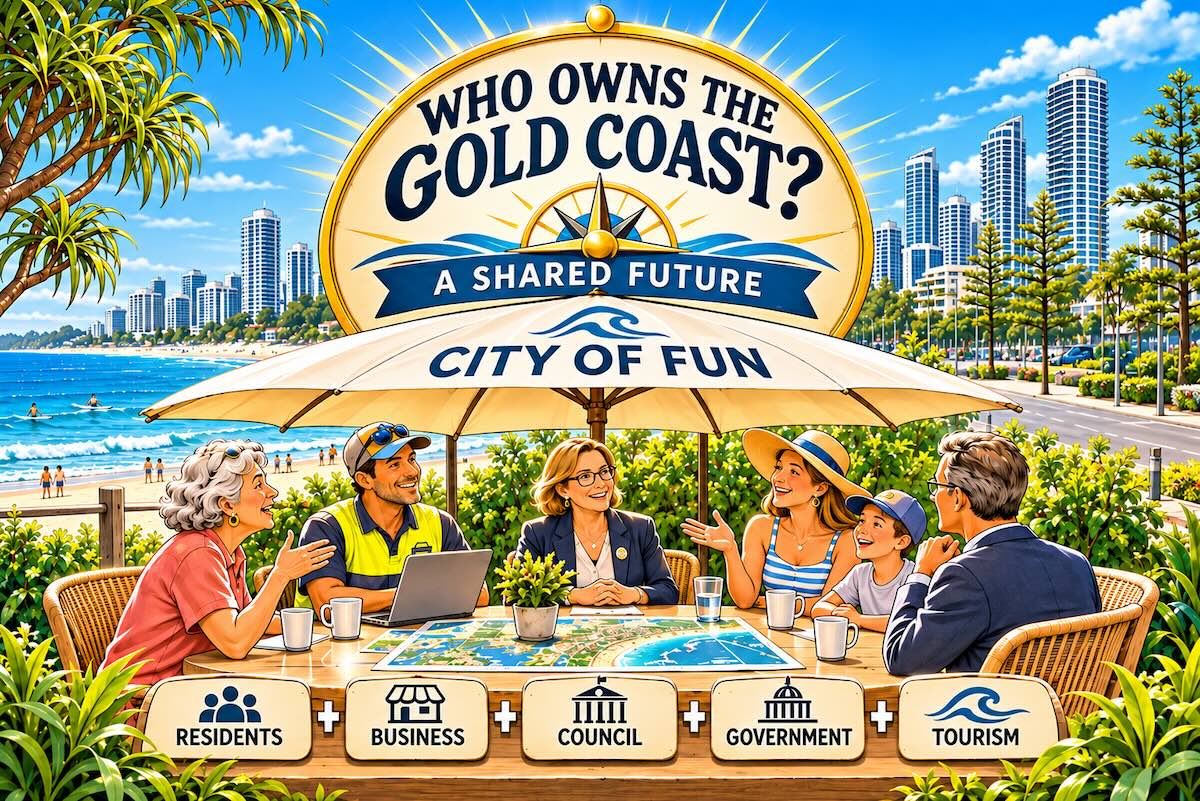
A Villager Asks a Question Worth Answering
Perhaps the Gold Coast isn't simply experiencing the pressures of tourism. Perhaps we are witnessing a city changing its identity, with different people experiencing that transformation in very different ways.
Previously in The Villager: In October, The Cost of Fun asked whether a successful tourist city could remain a successful place to live. Read Part One in the October edition of The Villager.
Read the full article below or listen to each section, narrated by Steve Holmes using AI-enhanced voice technology.
Cholangio News
CHOLANGIOCARCINOMA FOUNDATION AUSTRALIA
Looking Beyond the Horizon: New Directions in Cancer Research
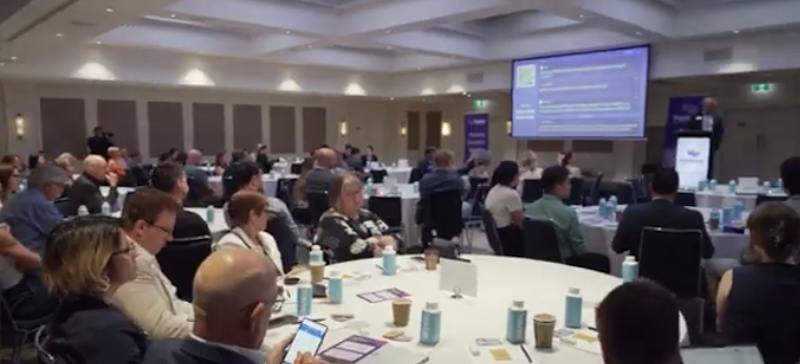
Research is moving forward, and sometimes the most promising developments come from looking beyond our own cancer community.
Recently, Steve Holmes, our Founder and CEO of Cholangiocarcinoma Foundation Australia, attended the Pankind Scientific Conference in Sydney, joining researchers, clinicians, industry representatives and patient organisations to explore the next chapter in pancreatic cancer research.
Under the theme Forward Science: The Next Chapter in Pancreatic Cancer Research, the conference brought together 151 delegates, all sharing a commitment to improving outcomes for people affected by this challenging disease.
Health & Wellbeing
A Nourishing Ritual

As I grow older, I have become increasingly mindful of avoiding harsh, synthetic chemicals on my skin. As a creative person, I love making things with my hands, and blending my own facial oil is one of the most nourishing rituals I have found.
My personal go-to blend combines castor, jojoba, and rosehip oils with a few drops of frankincense essential oil. It feels luxurious, costs a fraction of store-bought serums, and gives me complete control over what touches my face.
When sourcing ingredients, always choose cold-pressed, organic oils to ensure they are free from pesticides and retain their natural nutrients. If you want to start blending your own, here are the skin benefits of six exceptional oils:
Inside the Dish
French Lemon Yoghurt Cake

This lovely French-inspired yoghurt cake is simple to make, beautifully moist and full of fresh lemon flavour. The yoghurt gives it a soft texture, while the lemon glaze soaks into the cake to add a delicious finishing touch.
It's perfect served with a cup of tea or coffee, or as a light dessert to share with family and friends.
Ingredients
- 120 g yoghurt
- 200 g granulated sugar
- 3 large eggs
- 187 g plain flour
- 10 g baking powder
- A pinch of salt
- Grated zest of 1 medium-sized lemon
- 120 g sunflower or grapeseed oil
For the Lemon Glaze
- 60 ml fresh lemon juice
- 90 g icing sugar
Method
1. Preheat the oven to 175°C.
2. Spray a 20 cm round cake tin with cooking spray and line the bottom with baking paper.
3. In a large bowl, combine the yoghurt, sugar and eggs, stirring until well blended.
4. Add the flour, baking powder, salt and lemon zest, mixing until just combined.
5. Add the oil and stir well. Don't worry if the mixture initially looks as though it is separating. Keep stirring until it becomes smooth.
6. Pour the batter into the prepared cake tin.
7. Bake for 30–40 minutes, until the cake feels springy to the touch and a toothpick inserted into the centre comes out clean. Every oven is different, so check with a toothpick rather than relying on the baking time alone.
8. Allow the cake to cool in the tin for 10 minutes, then transfer to a wire rack.
Making the Lemon Glaze
Combine the fresh lemon juice and icing sugar in a small bowl, stirring until smooth.
Using a pastry brush, gently dab the glaze all over the cake. Keep brushing until all the glaze has been used. Some may drip off, but most will soak into the cake.
Allow the cake to cool completely. Sprinkle with a little extra icing sugar if desired, then slice and serve.
Enjoy!
Surf Club News
Summer Is Almost Upon Us!
Dear Mainbeachers,
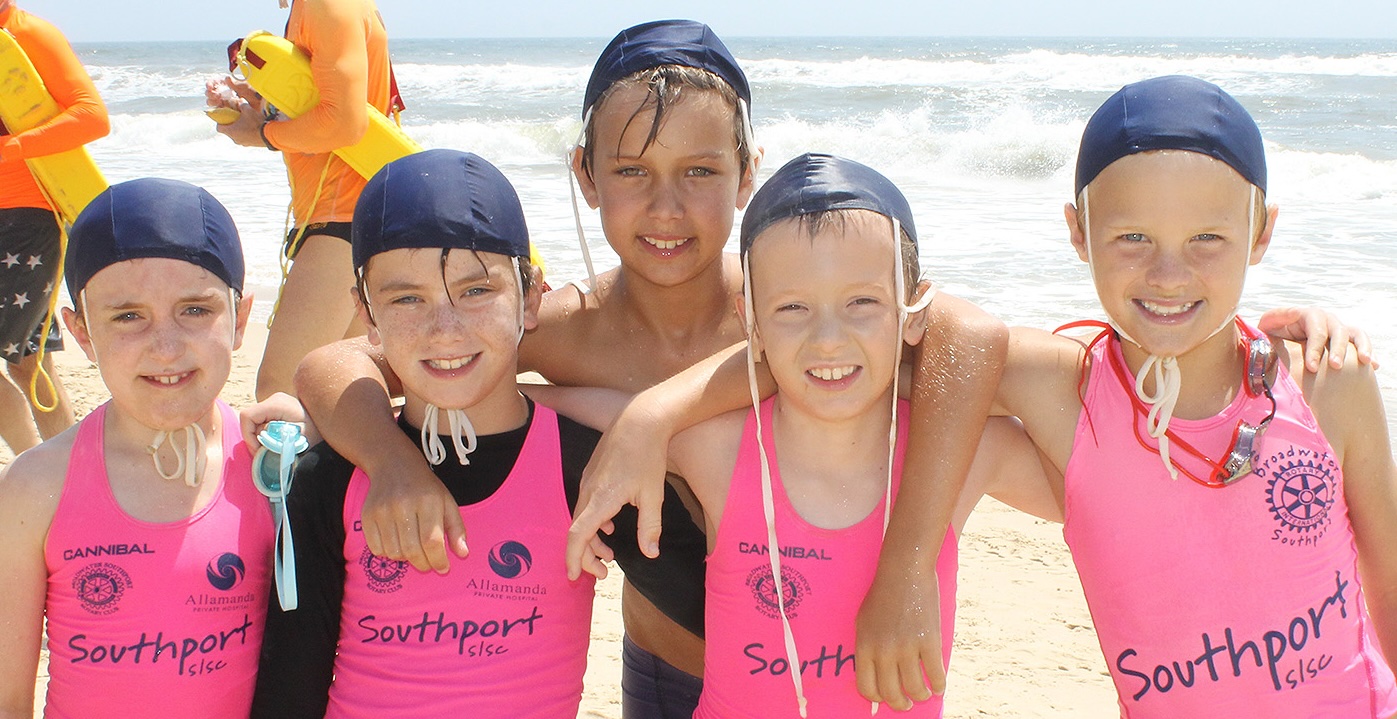
Well, summer is almost upon us, and Main Beach is certainly starting to come alive again! After all the rain we've experienced recently, we're looking forward to some beautiful Queensland sunshine and another busy holiday season ahead.
Our volunteer Lifesavers are back on the beach each weekend, and with one of the largest Nippers programs on the Gold Coast enjoying record registrations this season, there's a real sense of excitement around the Club. It's wonderful to see so many young families getting involved and the next generation of Lifesavers developing their skills on our beautiful beach.
Community Updates
Dear subscribers,
Following my recent updates in this column about our Breach Bail, Go to Jail legislation, it has now been passed in Parliament. Queensland now has the strongest bail laws in the country.
Under Labor’s weak laws, victim numbers skyrocketed by 193% and Queenslanders sent the message loud and clear to strengthen the laws.
The laws came into effect on November 30, and include:
- A new offence for committing a significant crime while out on bail for an Adult Crime, Adult Time offence. There are 47 offences covered by Adult Crime, Adult Time.
- A minimum mandatory sentence of 12 months to be served in custody.
- A new bail threshold, making it more difficult for defendants to be granted bail.
Thank you to everyone who contributed their thoughts via my survey.
Around Our Village
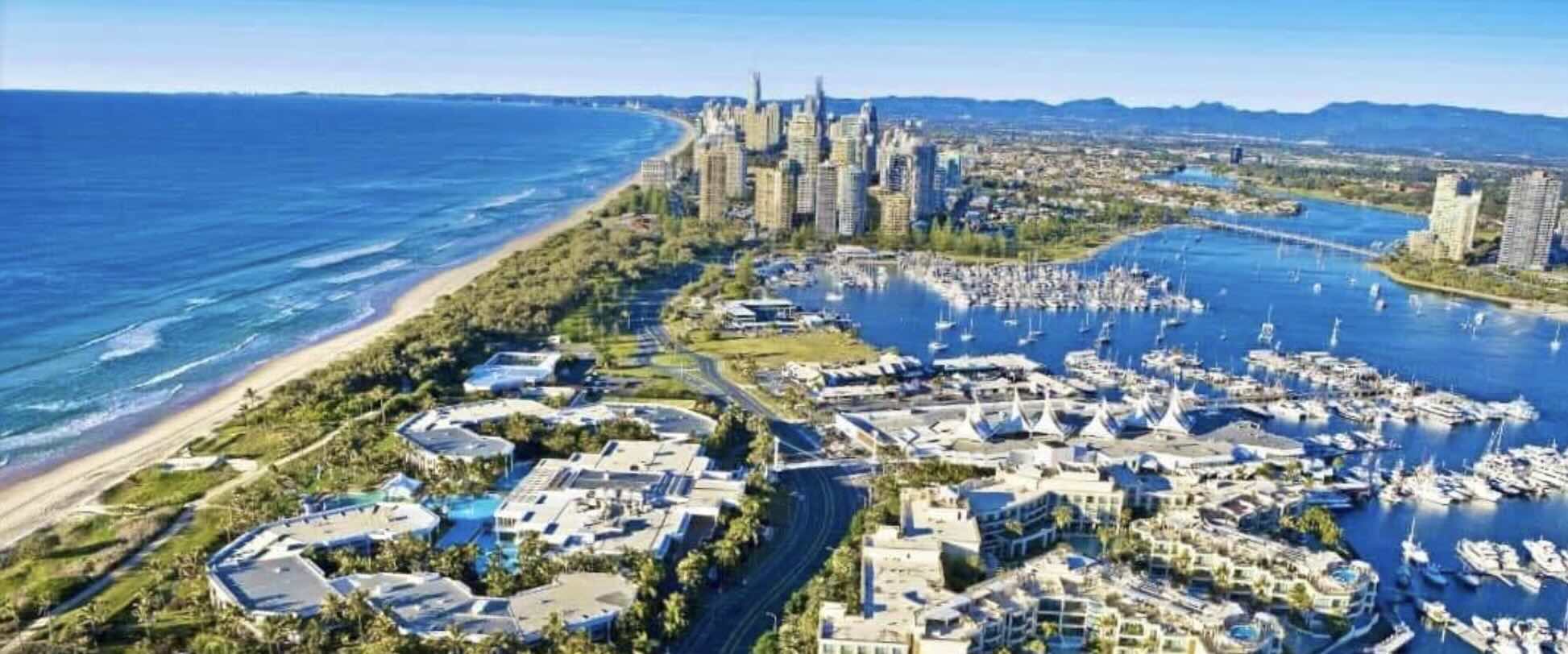
Welcome to the latest Main Beach Community Group Facebook group update! As a volunteer-run community group, we receive a wonderful variety of messages, questions, local news and requests to share every day. There is a lot happening in our village, and keeping everyone informed is truly a labour of volunteer love behind the scenes. For this edition, we've brought together some of the topics featuring prominently in our inbox, from supporting local businesses this Christmas and protecting our green spaces to community concerns, local favourites and what's coming up.
Where Have All the Bees Gone?

It is spring, and something is missing from my garden.
The bees.
Usually at this time of year, my white magnolias are alive with their gentle buzzing as bees move from flower to flower, gathering pollen. My purple-flowering geisha girls have attracted as many as four different varieties of bees, each going about their important work.
But this spring, I have not seen a single one.
I have asked another keen gardener whether he had noticed any bees.
“Yes,” he replied. “Dead ones.”
Those two words have stayed with me.